White Oak Dining Tables: Why They're the Most Requested Wood in Central Indiana
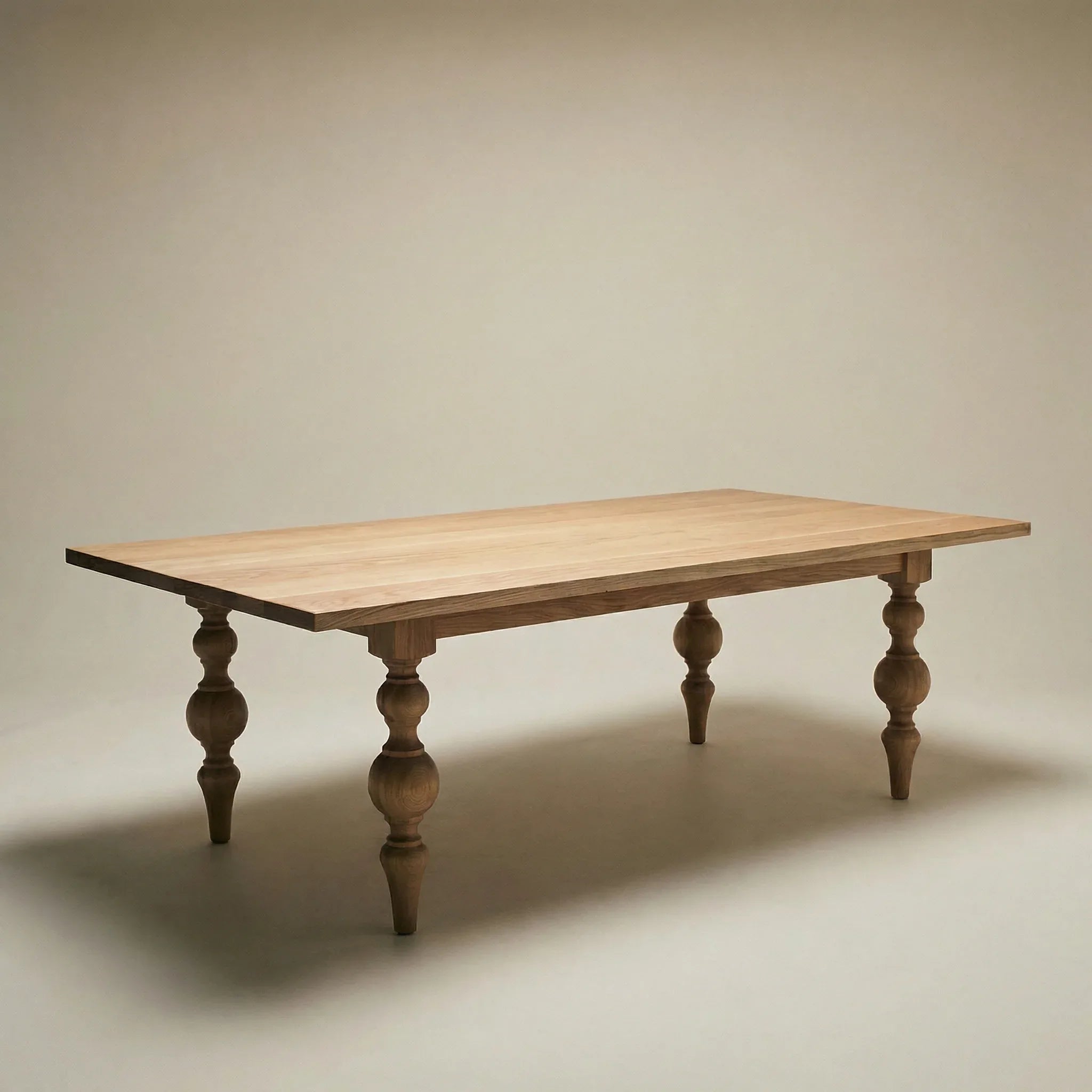
If you walk into a well-designed home in Carmel, Fishers, or the Meridian-Kessler neighborhood and there's a dining table that immediately catches your eye, there's a good chance it's white oak.
White oak has become the defining wood species in modern furniture design — and for good reason. It's warm without being overly yellow, it has a clean grain structure that works with both traditional and contemporary interiors, and it's one of the most durable domestic hardwoods available. At TRM WoodCraft, white oak accounts for more custom table orders than any other species we offer.
What Makes White Oak Different
White oak and red oak are related species, and people often assume they're interchangeable. They're not. The differences matter, especially in furniture that needs to hold up over decades of daily use.
Grain structure. White oak has a tighter, more uniform grain pattern. Red oak has a more pronounced, open grain with a slightly coarser texture. In a finished table, white oak reads as cleaner and more refined. Red oak reads as bolder and more rustic.
Color. White oak has a natural warmth to it — a honey-gold base that deepens with age. Red oak leans slightly pink when unfinished, which is why it's almost always stained. White oak looks beautiful with a clear coat or with stain.
Water resistance. This is where the two species genuinely diverge. White oak has a closed cellular structure (tyloses) that makes it naturally water-resistant. Red oak does not. This is why white oak has historically been used for barrels, boats, and outdoor structures. On a dining table, it means white oak handles spills, condensation from glasses, and everyday moisture better than almost any other domestic hardwood.
Hardness. Both species score above 1,200 on the Janka hardness scale, making them excellent for furniture. White oak is slightly harder than red oak, but the difference in daily use is negligible. Both are harder than cherry and softer than hard maple.
Quarter-Sawn White Oak: The Premium Cut
You may see the term QSWO — quarter-sawn white oak — when shopping for furniture. Quarter-sawing is a milling technique that cuts the log at a specific angle to the growth rings, producing boards with a distinctive straight grain and what woodworkers call "ray fleck" — a subtle, shimmering figure that catches the light.
Quarter-sawn white oak is more dimensionally stable than flat-sawn (meaning it moves less with seasonal humidity changes), and the ray fleck pattern gives each table a character you simply cannot get from other species. It's a hallmark of Arts and Crafts and Mission-style furniture, but it works just as well in a modern context.
The trade-off is yield — quarter-sawing produces less usable lumber per log, which makes QSWO boards more expensive. But for a table you're building to last 50 years, the upgrade is worth considering.
How We Source White Oak in Indiana
Indiana sits in the heart of the American hardwood belt. The forests within a few hours of Indianapolis produce some of the finest white oak in the world, and that's not hyperbole — Indiana white oak is sought after by furniture builders, coopers, and timber framers nationwide.
At TRM WoodCraft, we source the majority of our lumber from mills within 70 miles of our Fishers studio. Every board is domestically grown, sustainably harvested, and kiln-dried before it enters our shop. By keeping our supply chain local, we can be selective about grain quality, color consistency, and board thickness in a way that simply isn't possible when buying commodity lumber through national distributors.
White Oak Stain Options
One of white oak's greatest strengths is its versatility with finish. A clear coat lets the natural golden tone shine through. A light stain like natural or driftwood keeps things airy and modern. Darker stains like charcoal, espresso, or ebony create dramatic contrast while still letting the grain structure show.
We offer over a dozen stain colors for white oak, and every table can be customized to match your space. If you're not sure which direction to go, we offer swatch samples so you can see the actual stain on the actual species before committing.
What a White Oak Dining Table Costs
A custom white oak dining table from TRM WoodCraft typically ranges from about $2,800 to $5,500, depending on size, width, leg style, and stain selection. Larger tables (96 inches and up) and wider tops (42 to 48 inches) land at the higher end of that range. Custom stain colors carry a modest upcharge over standard stain options.
That investment buys you a table built from solid white oak — not veneered, not engineered, not assembled from imported components. Every joint is crafted for structural integrity, and the finish is a commercial-grade conversion varnish that resists scratches, heat, and moisture.
See It for Yourself
We're based in Fishers, Indiana, and we welcome visitors by appointment. If you'd like to see and feel the difference between white oak, walnut, red oak, and maple in person, order a sample kit or book a free design consultation.
Serving Indianapolis, Carmel, Fishers, Noblesville, Westfield, Zionsville, and nationwide with white-glove delivery.