Walnut vs. White Oak Dining Tables: Which Is Right for You?
If you're shopping for a solid wood dining table, it usually comes down to two woods: walnut and white oak. They're the two we get asked about most, and they're both great. They just look, feel, and live differently.
Here's a straight comparison to help you pick.
The quick version
- Pick white oak if you want a light to medium tone, visible grain, and a table that works with almost any style, from modern farmhouse to Scandinavian to transitional.
- Pick walnut if you want a rich, dark brown table that feels warm and a little more formal, and you're okay paying a bit more for it.


The same Summit Round table in white oak (left) and walnut (right).
Color and grain
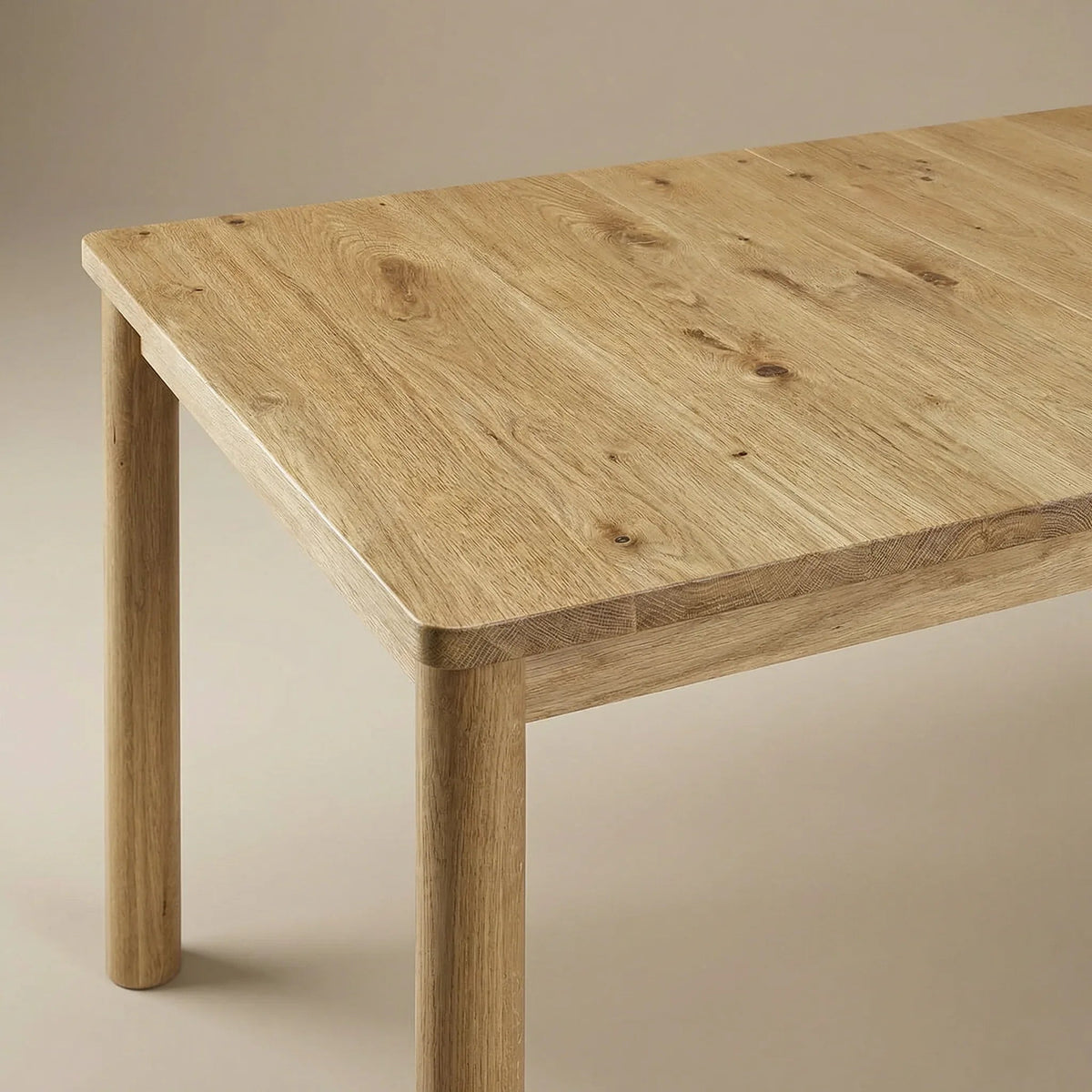
White oak ranges from pale tan to a warm golden brown. It has strong, straight grain, and quartersawn boards show "ray fleck," the little shimmering marks that oak is known for. It takes stain really well, so you can go natural, light, or dark.
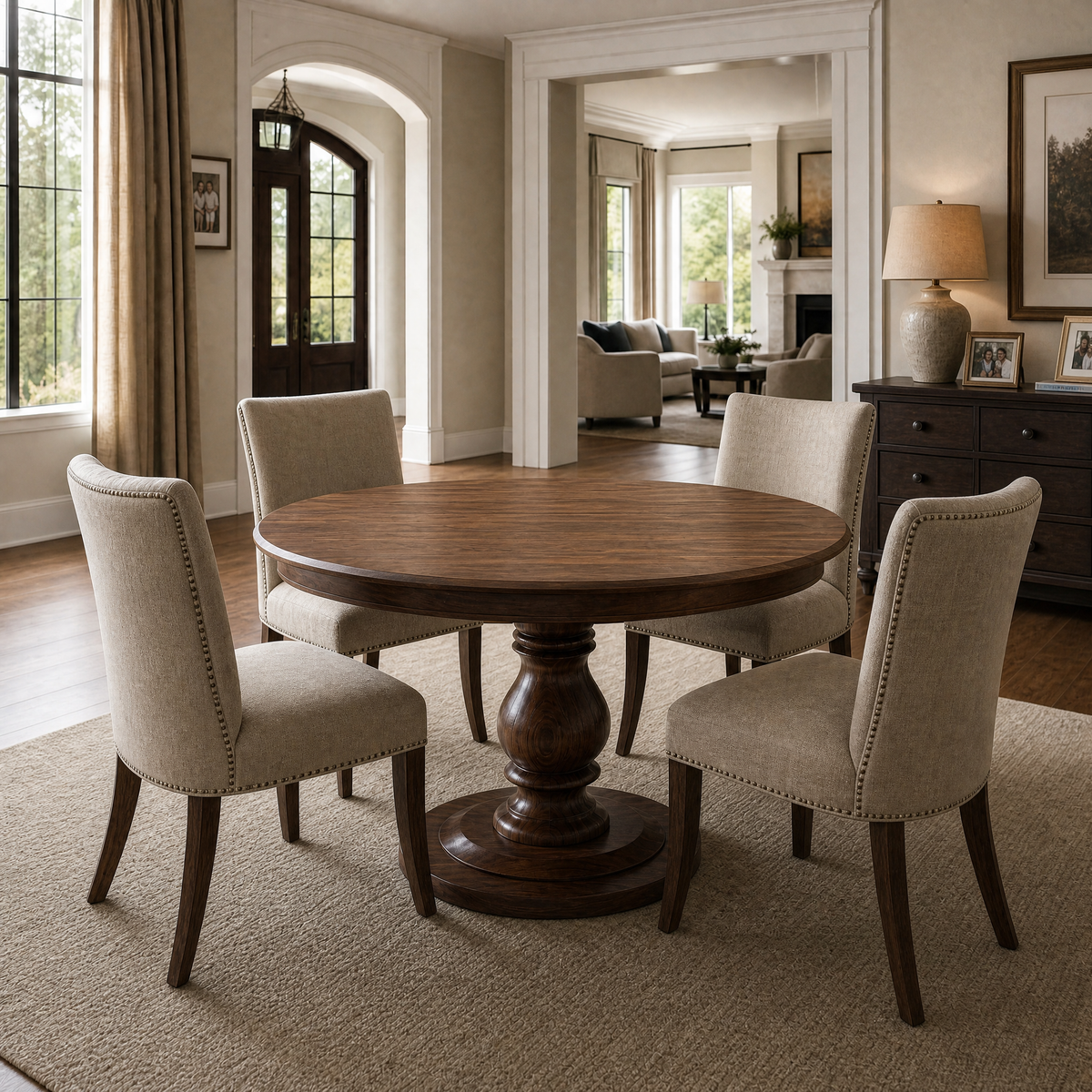
Walnut is chocolate brown, sometimes with purple or gray undertones and lighter streaks near the edges. The grain is smoother and more flowing. Most people leave walnut natural, because the color is the whole point.


Natural finish on quartersawn white oak (left) and walnut (right), from our sample collection.
Hardness and durability
White oak is harder than walnut. On the Janka hardness scale, white oak sits around 1,360 and black walnut around 1,010. In real life that means white oak shrugs off dents a little better, which matters with kids, dogs, and daily use.
That said, walnut is plenty tough for a dining table. Both will last generations when they're built from solid wood with good joinery and a durable finish.
How they age
This one surprises people. Natural walnut slowly lightens over the years and gets a warmer, honey tone. Natural white oak slowly deepens toward amber. Neither change is dramatic, but it's worth knowing if you're matching other furniture or floors.
Price
Walnut costs more. It grows slower and there's less of it. On our current tables, walnut usually runs about 15–20% more than the same table in white oak. For example, our 72" rectangle tables start around $3,085 in white oak and $3,655 in walnut, and 96" tables start around $3,605 in white oak and $4,350 in walnut.
If you love the look of oak but want to keep the budget lower, red oak and maple are worth a look too. They start several hundred dollars below white oak. See our full pricing breakdown.
Which works with your space?
- Light floors, white walls, lots of natural light: white oak in a natural or light finish feels fresh. Walnut makes a strong contrast and becomes the focal point.
- Dark floors: walnut can disappear against dark wood floors. White oak usually stands out better.
- Warm, moody rooms with darker paint or leather: walnut fits right in.
- Kitchen with white oak cabinets or floors: match it, or go walnut on purpose for contrast. Just avoid "almost matching," which tends to look like a mistake.

The Crestview in white oak.
Our honest take
White oak is the most requested wood in our shop right now, and it's the safer choice if you're unsure. It goes with everything and it's tougher. Walnut is the one people fall in love with in person. If that's you, it's worth the extra.
The best way to decide is to see both in your own light. You can order real wood and finish samples, or book a free design consultation and we'll talk through your space.
A few tables to look at in each: the Crestview in white oak, and the Summit Round and Tamarack in walnut.
Walnut vs. white oak: common questions
Is walnut or white oak more durable?
White oak is harder (about 1,360 on the Janka scale vs. about 1,010 for walnut), so it resists dents a bit better. Both are durable enough for everyday dining tables.
Is walnut more expensive than white oak?
Yes. On TRM Woodcraft tables, walnut usually costs about 15–20% more than the same table in white oak.
Can you stain white oak dark?
Yes. White oak takes stain well, from light natural tones to deep browns and near-black.
Does walnut change color over time?
Natural walnut gradually lightens and warms. White oak gradually deepens toward amber.
How long does a custom walnut or white oak table take?
Most TRM Woodcraft tables take about 12 weeks to build, not including delivery. Every piece is handcrafted in Indiana, USA, and delivered white-glove across the lower 48 states.