Pedestal vs. Trestle vs. Legs: How to Choose a Dining Table Base
Most people pick a table by the top: the wood, the color, the size. But the base decides how many people actually fit, where knees and chairs go, and how the table looks from across the room. Here's how the three main styles compare.
The Short Answer
- Pedestal: best for round tables and tight rooms. No legs at the corners, so you can squeeze in an extra chair.
- Trestle: best for long rectangle tables. Open legroom down both sides, with the supports at the ends.
- Four legs: the classic look and usually the most economical. Legs at the corners take up some seating room.
Not sure which fits your room? Book a free design consultation and we'll walk through it with your measurements.
Pedestal Bases
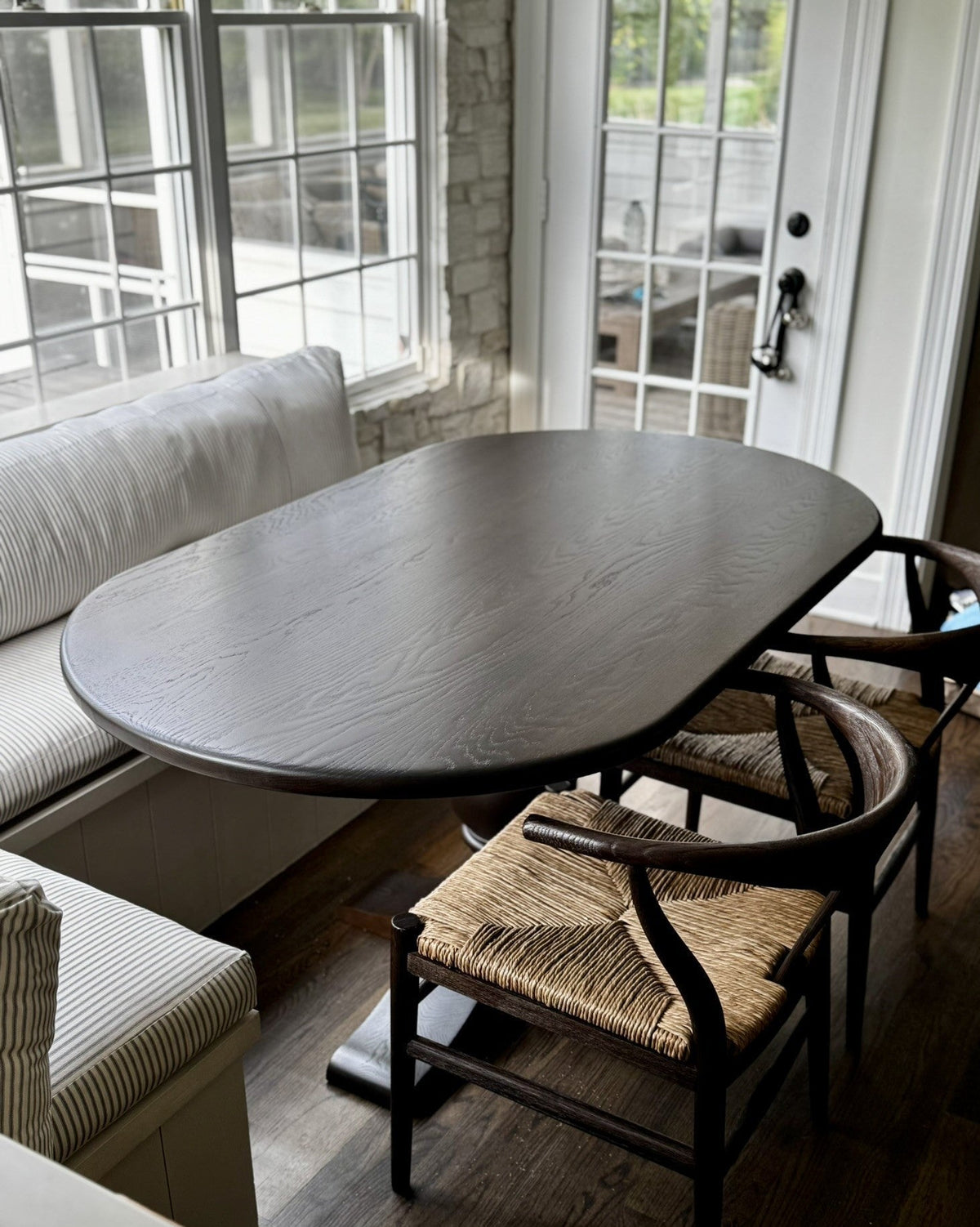
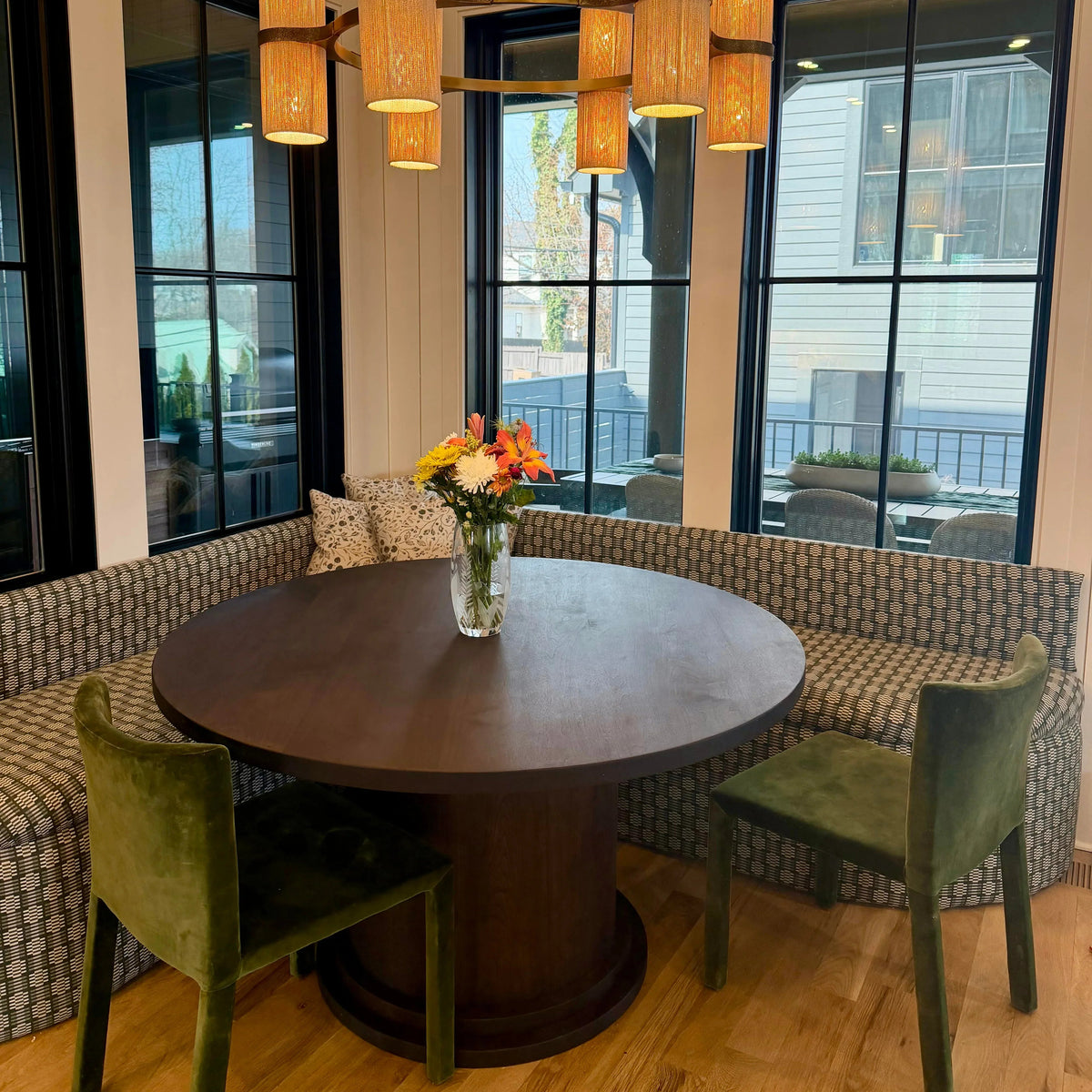
A pedestal table sits on one central column, or two on longer tables. With nothing at the corners, chairs can go anywhere around the edge. That's why pedestals are the go-to for round tables and breakfast nooks.
Longer rectangle tables use a double pedestal, one near each end. Our Rockwell Double Pedestal comes in 84" to 120" lengths and seats 6 to 10. For a big round example, see our 84-inch walnut round on a fluted pedestal.
Good for: round tables, small rooms, banquettes, fitting an extra guest.
Watch for: the feet of the pedestal can get in the way of chair legs on smaller tables. We size the base to the top so it's stable without crowding your feet.
Trestle Bases
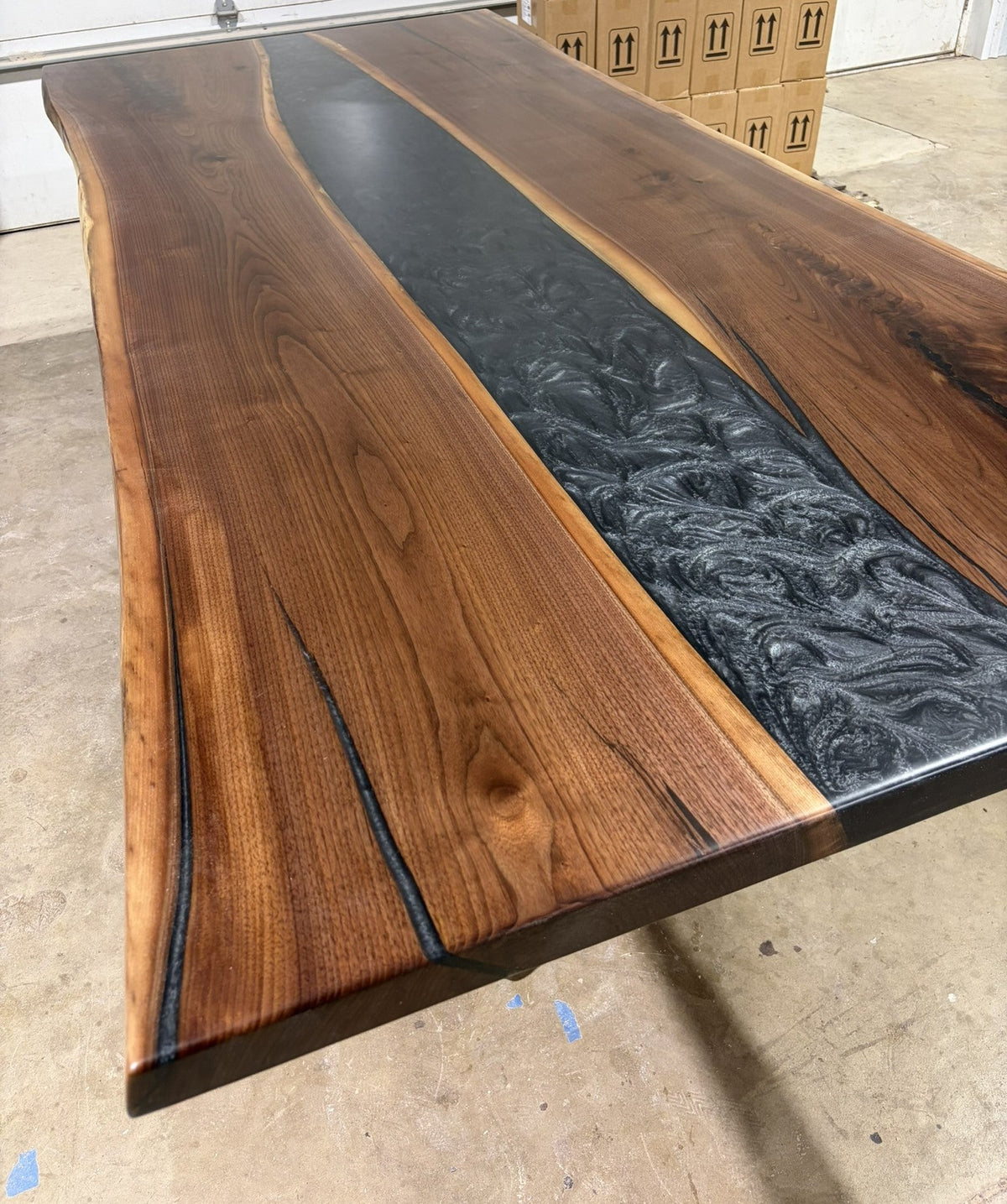
A trestle table has two end supports joined by a stretcher, a beam running underneath. Both long sides stay open, so you get full legroom down the length of the table. Trestles also suit long tables and can look anywhere from traditional to modern, in wood or steel.
Our Everett Trestle Table is a good example, and so is this walnut trestle table with a matching bench.
Good for: long rectangle tables, seating six or more along the sides, benches.
Watch for: the people at each end sit closer to the supports. A low stretcher can also get in the way of feet, so we pay attention to its height.
Four-Leg Bases
The classic. A leg at each corner, joined by an apron under the top. Four legs are simple, sturdy and usually the most economical base. They work in almost any style, from tapered mid-century legs to heavier turned legs.
Good for: any shape except large rounds, classic and mid-century looks, tighter budgets.
Watch for: corner legs limit where chairs can go. On a smaller table, you may lose a seat compared to a pedestal or trestle.
Which Base Fits Your Room?
| If you want… | Choose |
|---|---|
| A round table | Pedestal |
| The most seats around a small table | Pedestal |
| A long table with lots of side seating | Trestle or double pedestal |
| A bench on one side | Trestle |
| A classic look on a budget | Four legs |
Shape matters as much as the base. See round vs. rectangle dining tables and what size dining table you need.
Does the Base Change the Price?
Yes. Four-leg bases are usually the most economical. Pedestals, trestles and steel bases take more material and time, so they cost more. More in how much a custom dining table costs.
Dining Table Bases: Common Questions
Which dining table base is the most stable?
All three are stable when they're built and sized right. The key is a base that's proportioned to the top. A heavy top on a skinny pedestal is where wobble comes from.
What base gives the most legroom?
A pedestal or trestle. Both keep the corners and sides clear, so knees and chair legs have more room.
Can a pedestal table seat 8?
Yes. A large round pedestal or a double pedestal rectangle can seat 8 or more.
Is a trestle table good for a small room?
Usually not. Trestles shine on long tables. For a small room, a round pedestal often fits more people in less space.
Can I put a wood top on a steel base?
Yes. We build both wood and steel bases, from trestle and pedestal styles to modern metal frames.
Ready to Start?
Tell us your room size and how many people you want to seat, and we'll recommend a base and send exact pricing. Browse our dining tables or book a free consultation.