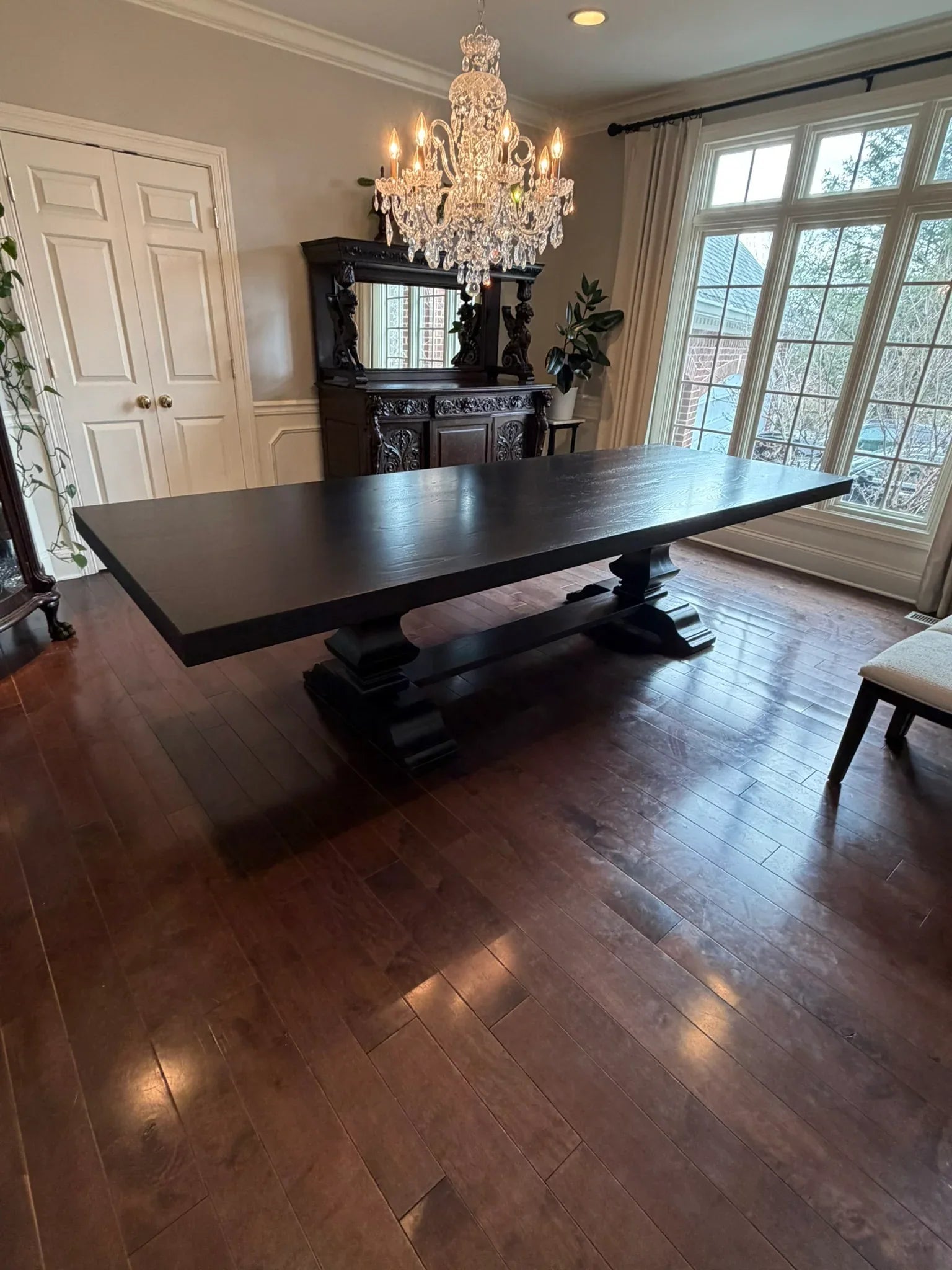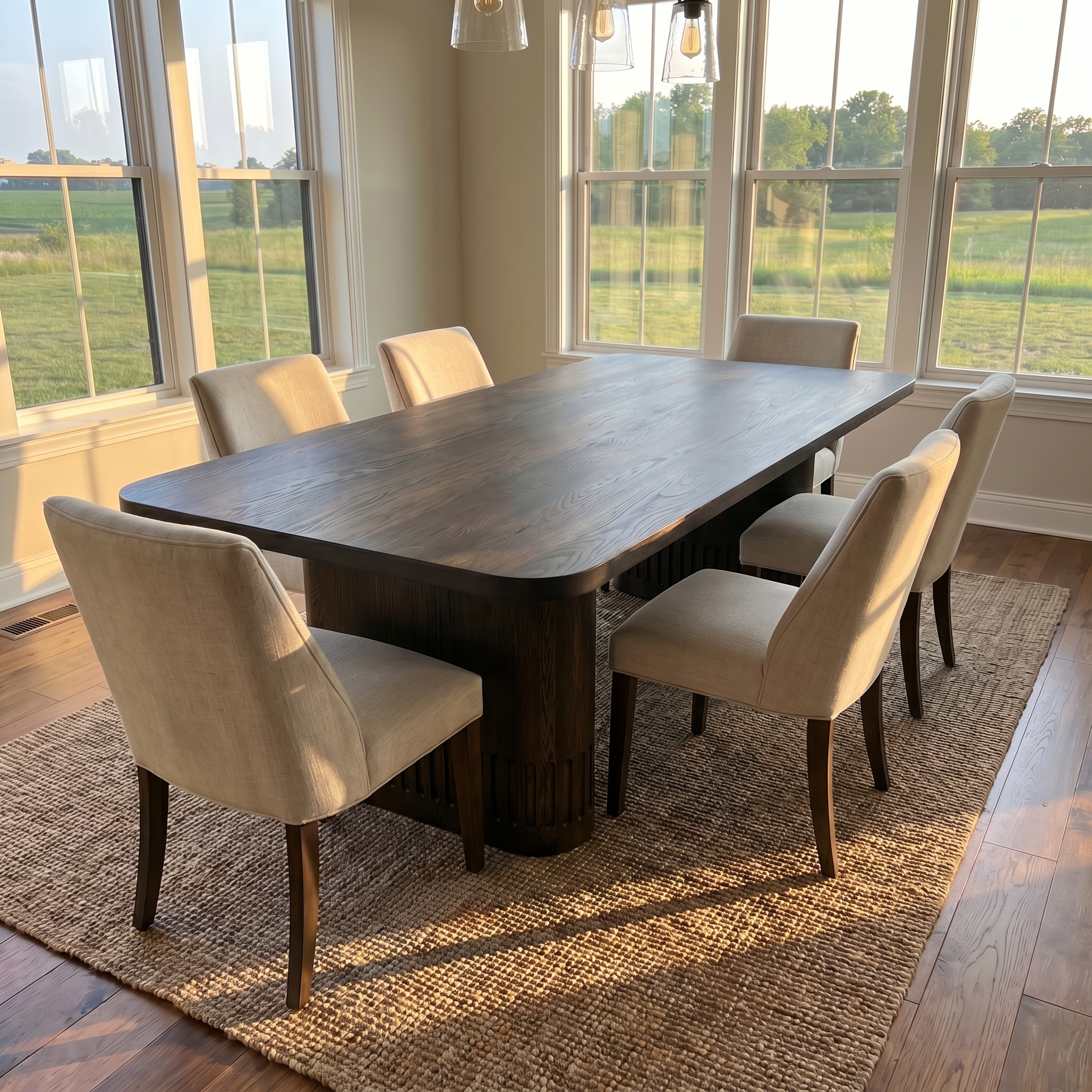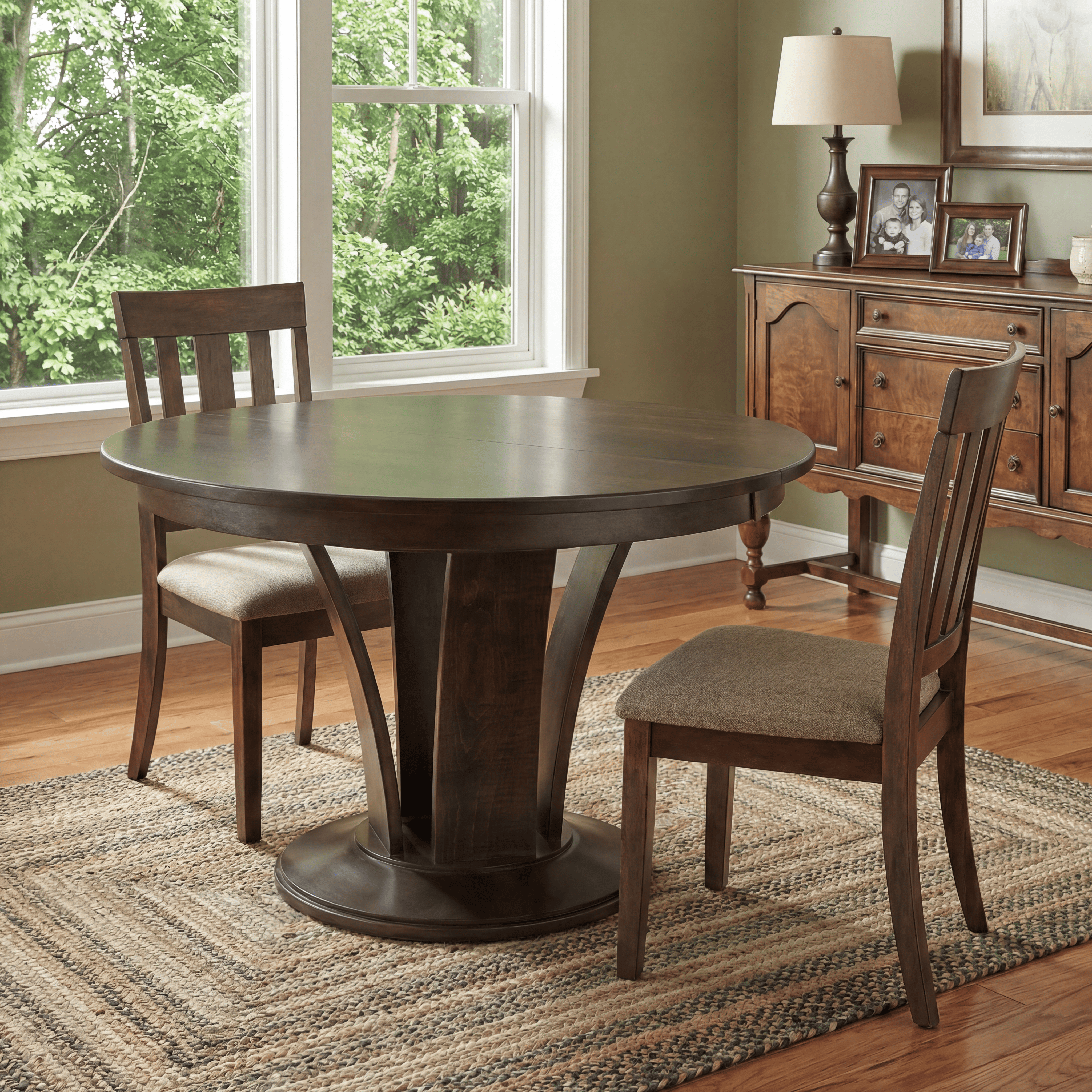
How to Choose the Right Dining Chairs for Your Dining Table
How to Choose the Right Dining Chairs for Your Dining Table
There's a moment, right after a new table arrives, when the room holds its breath. The grain catches the light just so. The proportions feel settled and sure. Then you pull up a chair — and the whole composition either sings or falls flat.
Choosing the right dining chairs isn't just a practical decision. It's the final act of design that determines whether your dining room becomes a place people linger or a space they simply pass through.
At TRM Woodcraft, we build solid hardwood dining tables made to last generations — and we're asked about chairs constantly. Here's everything you need to know to make the right choice.
1. Start with the Table Height
This is the one rule you can't skip. Standard dining tables sit between 29" and 30" tall. Your chairs need to leave 10" to 12" of clearance between the seat and the tabletop — that's the zone where legs, comfort, and posture intersect.
For most standard chairs, a seat height of 17" to 19" lands perfectly. If you're working with a custom table at a non-standard height, measure first and shop second. Getting this wrong means guests either feel sunken at the table or cramped into it.
2. Consider the Table Width
The width of your table determines how many chairs can sit comfortably along each side — and how much breathing room each person gets.
- Minimum: 24" of width per person
- Comfortable: 28"–30" per person
- 42"-wide table: Two chairs per side is ideal
- 48"-wide table: Opens the room for slightly larger or armed chairs without crowding elbows
If you're dining on a TRM table with a 48" width option, that extra footprint gives you meaningful flexibility in chair selection.
3. Chair Style: Finding the Right Visual Weight
Your table carries presence. Your chairs should complement it — not compete with it or disappear into the background.
Upholstered chairs add warmth and softness, and work beautifully alongside the natural grain of solid hardwood. They invite people to settle in and stay a while. Choose a fabric with enough durability to handle real use — performance velvet, leather, and woven textiles all earn their place here.
Wood chairs — especially those in a matching or complementary species — create a sense of cohesion that feels intentional. A white oak table paired with walnut chairs creates a subtle tonal conversation. Matching species creates seamless unity.
Mixed seating — chairs along the sides, a bench or upholstered host chair at the ends — is one of the most sophisticated choices you can make. It adds variety without chaos, and it's the signature of a thoughtfully curated room.
4. Armchairs vs. Side Chairs
Armchairs belong at the head positions. They offer a natural sense of ceremony and presence at the ends of a long table. Side chairs — without arms — are more practical along the length, allowing guests to slide in and out without catching elbows on armrests.
A common approach that always works:
- 4–6 armless side chairs along the long sides
- 2 host armchairs at the heads
The result feels deliberate, layered, and right.
One caveat: If you plan to tuck chairs fully under the table when not in use, verify that armrests clear the apron. Measure the underside of your table's apron before committing to an armed chair.
5. The Proportions of the Chair Back
Chair backs do more visual work than most people realize.
- Low-back chairs — keep sightlines open, give a room an airy, modern quality
- High-back chairs — add formality, drama, and a sense of occasion
As a general principle: low backs suit contemporary and transitional spaces, while high backs anchor traditional and maximalist rooms. Neither is wrong — but you should decide which energy you're building toward before you buy.
For most TRM tables — long, clean-lined, and built in solid hardwood — a chair with a medium to tall back provides the visual mass to match the table without overwhelming it.
6. How Many Chairs Do You Actually Need?
The answer is almost always: more than you think.
Start by considering your table's capacity at full extension, not just its everyday footprint:
- 72" table → seats 6 comfortably (2 per long side, 1 per end)
- 96" table → seats 8 to 10
Buy for your table at its largest, or plan now for chairs you'll add later. Discontinued chair lines are a real problem — matching chairs years down the road is harder than it sounds.
7. The Long View
A dining table built from solid hardwood is a 50-year decision. The chairs you place around it deserve the same scrutiny.
When evaluating chair quality, look for:
- Solid wood frames — not engineered wood or hollow construction
- Quality joinery at the corners and legs
- Upholstery rated above 30,000 rub count if you have children or expect regular use
Cheap chairs around a beautiful table create a mismatch that the room never quite recovers from. The inverse is equally true — quality seating elevates everything.
A Note on Custom Tables
Every TRM Woodcraft table is made to order in Fishers, Indiana, in solid hardwood — white oak, walnut, maple, red oak, and more. Because our tables are built from real wood rather than veneers or composites, they develop character over time rather than deteriorating.
If you're designing a dining room from scratch — or replacing a table that no longer fits the room — we're happy to talk through sizing, wood species, and how your chair choices might shape the final spec.
Lead time on all TRM Woodcraft dining tables is 10–14 weeks. Every table is built by hand in Fishers, Indiana.